By R. Vaya
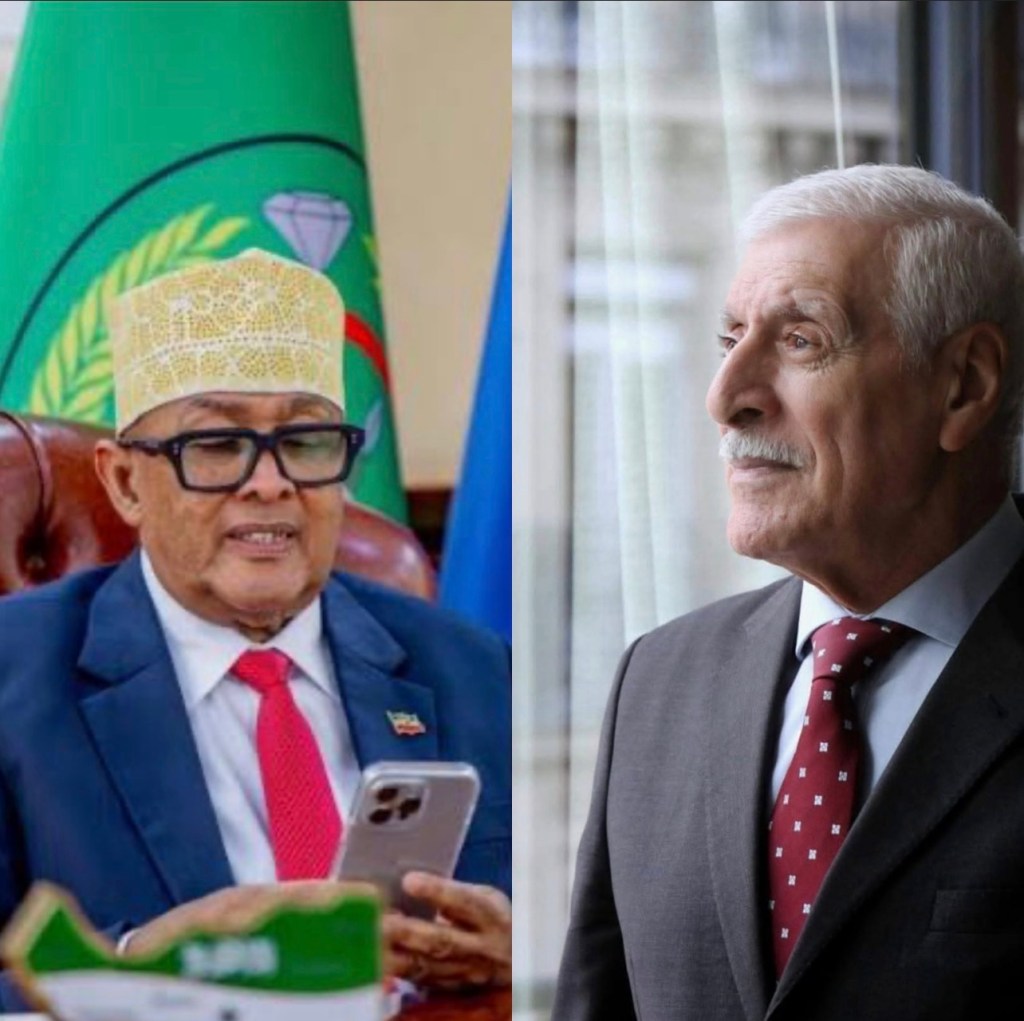
Following the December 14 Declaration of Independence in Paris, supporters of a free Kabylia hope the democratic world will increasingly see it not only as a nation seeking freedom, but also as a future strategic, stable, and democratic ally in North Africa.
Africa’s political map has never been as permanent as it appears. Borders change. Nations emerge. Peoples long denied international recognition eventually find a place among the community of states. But recognition rarely comes quickly. It is built through perseverance, diplomacy, credible institutions, strategic partnerships, and the ability to convince the world that a new nation can contribute to peace and stability.
Somaliland’s experience has given new meaning to that reality. After functioning with effective autonomy and relative stability since 1991, Somaliland crossed a historic diplomatic threshold in December 2025, when Israel became the first nation member of the United Nations organization to formally recognize it as an independent state. Since then, Somaliland has continued expanding international relationships and presenting itself as a potential and strategic economic partner.
Somaliland has approximately a population of over 6 million, Kabylia over 8 million. However, the opponents and doubters of Kabylia’s independence claim that our population number is not sufficient to adopt Kabylia as an independent state from Algeria. But, this statement is part of their ignorance, lack of knowledge, or stubbornness. Surprisingly, the 2026 soccer World Cup showed us the opposite. Curaçao has approximately 185,000 people and Cabo Verde has half a million population, and both states rely heavily on tourism revenues.
Hence, these two main participants showed us that Kabylia is well positioned to be a free state because mathematically it beats the numbers.
Now that we cleared the fallacious statement. The question for a mere Kabylia’s independence supporter is whether Kabylia follows the steps of Somaliland’s political success?
December 14: A New Chapter for Kabylia
On December 14, 2025, in Paris, Mr. Ferhat Mehenni proclaimed the independence of Kabylia during a ceremony attended by supporters and international guests. The declaration presented the proposed Kabyle state as a federal, secular, and democratic republic.
Whatever the international community’s response may ultimately be, the declaration represented a significant political turning point for the Kabylia ‘s independence movement.
Kabylia’s issue is no longer a matter of cultural survival, identity, linguistic rights, or autonomy. The December 14 declaration placed a new objective before the international community: Kabylia’s self-determination and its recognition by the international community. Currently, no government has yet formally recognized the proclaimed Kabyle republic. That reality should be stated clearly. But international recognition is rarely achieved in a single moment. However, declarations can open diplomatic processes that take years—or even decades—to produce results.
Somaliland’s experience itself is proof of this kind of struggle.
In fact, Its declaration of independence dates to 1991. Nonetheless, formal recognition from a UN member state did not come until December 2025––More than three decades separated the declaration from the first major diplomatic breakthrough.
Thus, for Kabylia, December 14 may therefore be understood not as the conclusion of a struggle, but as the beginning of a new diplomatic phase.
What could lead Kabylia towards international recognition?
International recognition is never guaranteed. It depends on political circumstances, international law, diplomatic interests, regional geopolitics, and state’s interests in North Africa.
Yet supporters of Kabylia’s independence have several assets that may strengthen their case over time.
Indeed, Kabylia possesses a distinct language, culture, collective identity, and long history of political mobilization. It also has a substantial diaspora, in Europe and North America, capable of building relationships with their elected officials, intellectuals, businesspersons, artists, institutions, and international organizations.
Also, its location is another important factor. Kabylia lies on the Mediterranean, facing Europe and positioned within a North African region of growing geopolitical importance. The wider region faces serious challenges, including authoritarian rule, instability across the Sahel, extremist violence, irregular migration, energy insecurity, and competition among global powers. Therefore, in this environment, supporters of independence argue that a peaceful, secular, democratic, and stable Kabylia could become a valuable partner for democratic nations.
Hence, this rhetoric may ultimately be some of Kabylia’s strongest edges.
The case for international recognition cannot rely only on history or identity. It must also answer a practical question asked by governments around the world:
What kind of nation would Kabylia become?
Which Kabylia’s strategic future allies in North Africa, and beyond?
Though the vision to present to the free world should be clear.
A free Kabylia must aspire to become a nation governed by democratic institutions, rule of law, political pluralism, equality, freedom of conscience, and respect for fundamental human rights. It must also seek peaceful relations with its neighbors and reject expansionism, extremism, and authoritarianism.
Moreover, it must present itself as a trustworthy partner with the United States, Europe, and other democratic nations — a country prepared to cooperate on the Mediterranean’s security issues, economic development, technology, education, environmental protection, and regional stability.


Leave a Reply