By S. Tinhinan
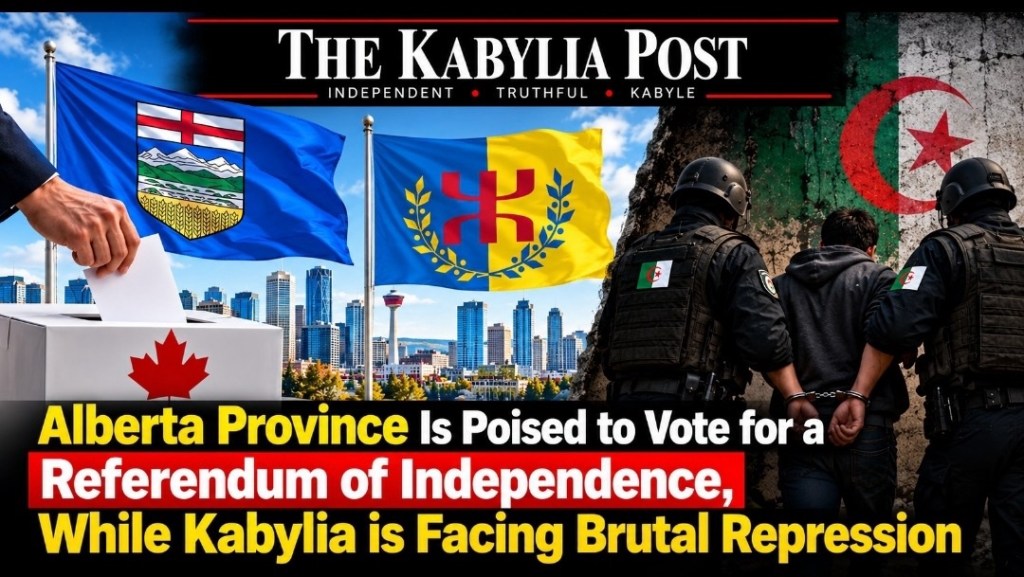
(Ottawa, Canada)–Alberta—a province in Canada, the world’s fourth largest oil reserve is set to vote for a referendum of independence from Canada on Monday, October 19th, 2026. This vote is not a direct referendum on independence, but it will decide whether to remain a province or instruct the government to begin a legal process toward a future referendum on independence.
In the short term, It is a way to give Alberta leverage in negotiations with Ottawa. As a consequence, Ottawa immediately invested billions in Alberta’s economy to counter and deter Albertans from seeking independence.
Also, Canadian Prime Minister Mark Carney made an appeal to voters considering a path toward independence in his home town province of Alberta on Friday, warning that a referendum is a dangerous gamble at a time of growing threats to Canada’s sovereignty since the U.S. President Donald Trump is waging a trade war and threatening to make Canada the 51st state.
In addition to Alberta, another threat to Canada’s national unity is coming from the Quebec province, in which le Parti Quebecois returned to power on October 5th, with 30% support for independence, though its leader said he will not hold a referendum while Trump is U.S.President.
In the past, Quebec voters have twice rejected independence, in 1980, and the recent one was in 1995, the “NO” victory was obtained by a narrow and slim majority of 50.58 percent, and Quebec remained a province of Canada.
Indeed, these political developments show, in the past and now, that Canada is a democratic nation, it is the people who have the decision through ballot, and no one could go against the aspiration of the people. Each entity, either the government, or political parties in the provinces are free to campaign depending on the nation’s interests, or people’s aspirations and grievances.
However, in dictatorships, like Algeria, people have no right to express themselves on fundamental issues related to politics or society.
The case of the MAK movement (Kabylia self-determination movement) is striking. It has the same aspirations of independence because of identity and cultural denial, along the lack of economic investment in Kabylia.
Algeria has deliberately kept Kabylia under severe military control since independence. It sought by all means to undergo ethnic and cultural cleansing by promoting Arabic language and Islam as a unique religion in Kabylia. Hence, this dystopian scheme was enforced by violence usage targeting activists who are defending Kabylia’s cultural and linguistic heritage. To bring down and to submit Kabylia, it has launched a demoniac and earth scorching policy aimed at burning Kabylian people and their land each summer.
Thus, the Kabylian self-determination movement is seeking to protect Kabylia’s land and preserve lives, bring economic relief to Kabylians, defend and promote Kabylia cultural and identity exceptionalism, which is under permanent threat from the Algerian colonial regime. In its political agenda, it aims to hold a democratic referendum under United Nations supervision on whether Kabylians are willing to separate themselves from Algeria or to remain in Algeria.
MAK’s leader, Mr. Ferhat Mehenni, reached out numerous times to the Algerian military regime to seek a peaceful political solution and dialogue for the future of Kabylia by accepting a referendum, but the Algerian dictatorship never responded to his demand.
While Alberta can openly debate its future relationship with Canada, Kabylia’s demand for self-determination faces repression. This disparity illustrates the profound difference between a political system that allows competing visions on national identity to be debated and one that seeks to suppress them through criminalization and coercion.
Therefore, Algeria rather than accepting the MAK initiative, It subsequently criminalized the MAK movement, labilized it as a terrorist organization, condemned its leaders to life sentences, imprisoned its activists, harassed their families, and condemned its supporters to a forced exile.
Facing a political deadlock from the Algerian military regime, the MAK movement declared its independence on December 14th , 2025, and now it is seeking international recognition.


Leave a Reply