
By N. Tilleli
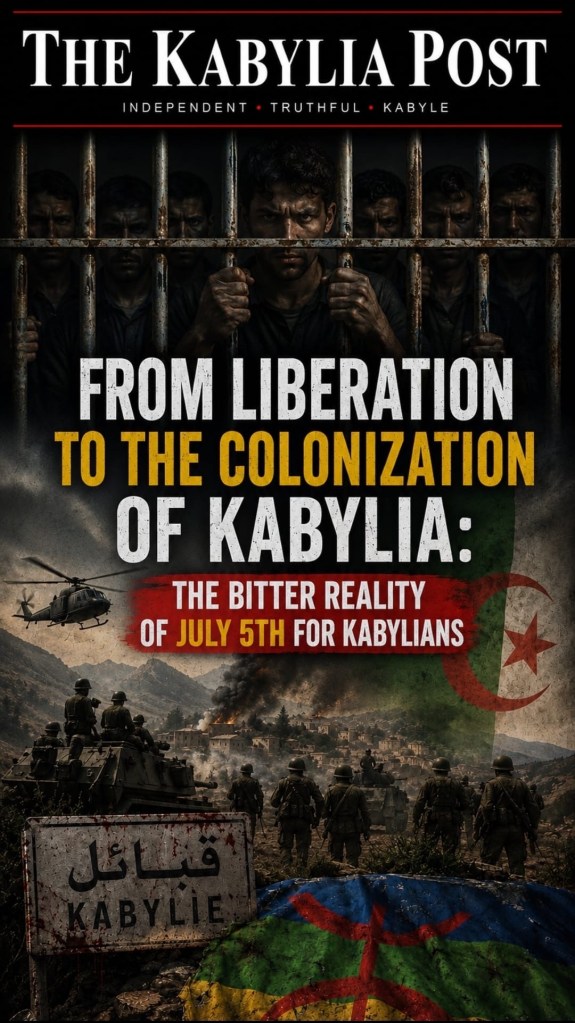
The Kabylians Paid a Heavy tributeto Liberate Algeria from France. Today, Their Grandchildren Are in Algerian Prisons
For Algeria, July 5th is officially celebrated as Independence Day—the day the country marks the end of French colonial rule. However, for many Kabylians, July 5th carries a profoundly different meaning. It indeedrepresents a painful historical paradox: Kabylians who played a major role in the struggle to liberate Algeria from French colonialism experienced, in the years following independence, their own homeland increasingly subjected to political repression, cultural denial, imprisonment, marginalization, and forced exile.
Women and men of Kabylia sacrificed enormously in the struggle against French colonial rule. Kabylianvillages paid a devastating price. Families lost relatives, sons, daughters, and entire generations in the fight for freedom. But today, the grandchildren of those who fought for Algeria’s liberation are themselves behind bars: More than 500 Kabylians are imprisoned, described by activists and human rights advocates as political prisoners or hostages of the Algerian state. Subsequently, others have fled abroad, forced into exile by fear of arrest, prosecution, or political persecution. Unfortunately, this is the bitter reality that July 5th represents for Kabylians.
From One Domination to Another
The independence of Algeria was supposed to bring freedom, joy and happiness to all peoples who had fought against colonialism. Nevertheless, Kabylians believe that the end of French rule sparked the beginning of another era of domination over Kabylia. Thus, from the early years of independence, the Kabylian identity was subject to denial by the unlawful power holders who held the state institutions without legitimacy. As a consequence, the Kabylian culture, identity, and language were marginalized. The Kabylian people were pushed aside by a centralized state which imposed an official national identity that is based on lies and fallacious historical facts.
This was the dawn of “ ZERO Kabylian Operation”, which later aimed at a progressive policy that removed Kabylian representation, weakened Kabylia economically, marginalized its language, and considered the promotion of Kabylian identity as a threat and danger to the Algerian-Arab identity.
Repression, Imprisonment, and Identity denial
For decades, Kabylia has been the scene of repeated political repression, and political plots:
Kabylian activists, intellectuals, journalists, artists, students, and ordinary citizens have faced arrests, intimidation, surveillance, imprisonment, and pressure for defending their identity or political and religious beliefs.
To do so, Algeria recruits agents among the Kabylian population, and it rewards their dirty trick by offering them jobs, checks, apartments, different privileges, political promotions, etc.
Land that Produces Exiles
Kabylia has given Algeria some of its greatest fighters, intellectuals, workers, artists, and political figures. Yet generations of Kabylians have been forced to leave: A people who fought for freedom have seen generation after generation forced to seek that freedom elsewhere.
France, Germany, Canada, the United States, and other countries have become home to a vast Kabyliandiaspora—not only because Kabylians sought opportunity abroad, but also of decades of political and economic violence which left many feeling that exile was their only path to freedom and dignity. Therefore, ahomeland rich in human talent has been emptied of its youth, and became manpower to prosperous and democratic nations.


Leave a Reply