By Aris Ufuzar
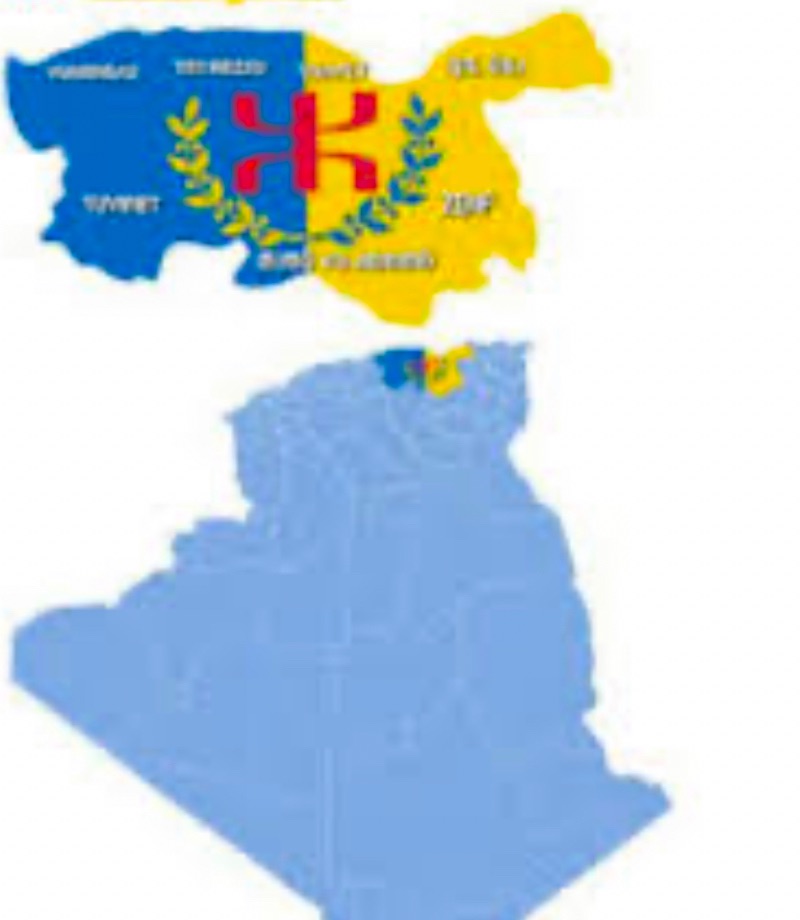
The current Kabylia land is attached and under control of Algeria. Kabylia plays an important role in the geographical, cultural and political landscape of the Mediterranean region.
Kabylia is not Arabic, it is rather North African and Mediterranean.
Geographically, Kabylia is located in the north of Algeria, on the Mediterranean coast, in the provinces of Tizi Ouzou, Béjaïa, Bouira, and in some parts of the provinces of Jijel, Sétif, Bourdj-Bouaarraridj, Boumerdes. It is characterized by mountains covered with forests and Mediterranean vegetation, offers a diverse scenery, such as valleys, gorges and beaches on the coast. The climate is Mediterranean, the mountains offer a conducive shelter to biodiversity.
Kabylians are the natives of this region. Their approximate number is about 10 million, with a strong diaspora, especially in France. The Kabylian culture is rich and millennial, marked by a strong Berber identity (Amazigh). In their language, the Kabylians are named IQVAYLIYEN (masculine/plural) and THIGVAYLIYEN (feminine/plural). Ethnically, Kabylians are part of the Berber group (Amazigh). The Kabylian language is the language of Kabylians, it is a fundamental pillar of their identity.
Since Algeria’s independence in 1962 from French colonialism, the Kabylian language has been weakened because of an assimilationist and hegemonic policy of the Algerian State, which resulted in reducing and shrinking the number of Kabylian speakers. However, the Kabylian woman has fought back, and played a tremendous role in transmission and preservation of this linguistic and cultural heritage.
Kabylia is known for its secularism, freedom of worship and religious tolerance. Kabylian spirituality is deeply rooted in the history and culture of the region. It is marked by a personal and community dimension of faith, where religious beliefs, ancestral traditions and mystical practices are mixed. Kabylia has a rich pre-Islamic history, and some traditional Berber beliefs persist in spiritual practices, even after the arrival of Islam. Traditional songs and Kabylian oral literature have contributed to the preservation and promotion of collective Kabylian memory. Those who contributed to the vanguard of this millennial heritage were numerous, and having sometimes paid the price of their commitment through their life or exile; namely, Matoub Lounes, the Amrouche family, Slimane Azem, Mouloud Mammeri, Mouloud Feroun, Said Boulifa, Idir, Ferhat Imazighen, Muhand Uharun, etc.
In addition to these intellectuals, the stellar contribution of the Berber Academy has allowed today’s generation to be proud of its history and identity, assuming itself fully in its kabylianity as such.
Politically, Kabylia has a history marked by a strong sense of autonomy and resistance. This region was a bastion of resistance against successive colonizers: Romans, Vandals, Arabs, Ottomans and French. Many historical Kabylian figures fought against the invaders such as Fatma n’Soummer, Zizi Ameqran, Zizi Ahedad, etc.
In the 20th century, another elite campaigned against French colonialism, leading to its liberation. The main leaders who led the fight are: Abane Ramtane, Krim Belkacem, Hocine Ait Ahmed, Mohand Ulhadj, Amirouche, Abderhmane Mira.
After independence in 1962, Kabylia found itself in a political tension with the central Algerian government because of a clan that seized forcefully power, known as the “border army”. Thus, in 1963, Kabylia revolted against the border army.
This was followed by the “Kabylian Spring” of 1980 and 1981 to claim identity and cultural recognition. However, the Algerian state has tamed in blood the demands of Kabylians. The aftermath of this uprising was sad and unbearable to the extent that hundreds of demonstrators were arrested and taken prisoner, thousands injured, as well as the rape of female students by the Algerian army (the news was covered by French news channels).
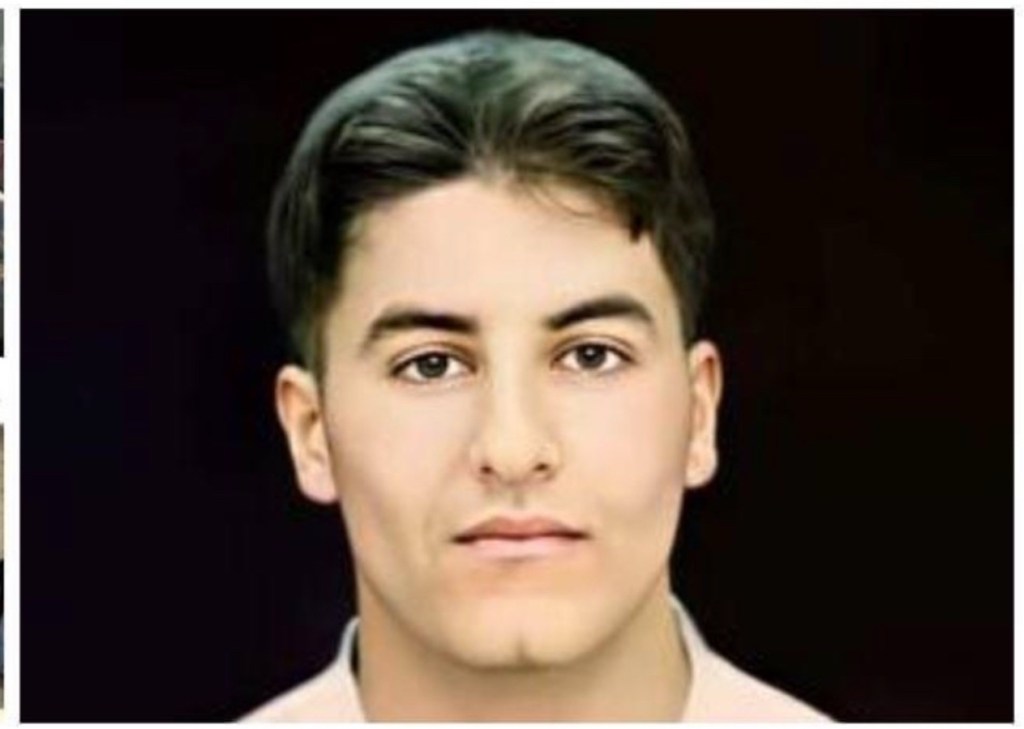
In 2001, another revolt erupted, known as the “Black Spring”, it was marked by demonstrations in favor of linguistic and political rights of Kabylians, after the murder of Massinissa Guermah: a 19-year-old high school student, murdered by the Algerian Gendarmerie. The response of the Algerian authorities was without appeal, it was bloody and savage, they shot and killed by means of war peaceful demonstrators. There were more than 130 dead, hundreds injured, and thousands of people arrested.
Thus, these horrendous events dug a gap between Kabylia and the Algerian state, and it was a point of no return. Subsequently, a feeling of revolt and rejection of the central power of Algiers intensified because of its colonial and apartheid practices, and of its insensitivity and contempt regarding the legitimate demands of the Kabylian people. Therefore, the relationship of trust between the central power of Algiers and Kabylia is definitively broken.
Kabylia now seeks to protect its children from the Algerian ruthless regime and ensure them a better future.

To this end, a new perspective was born by a new generation of self-assured activists, aware of Kabylian existential issues. Consequently, a Kabylian political movement was born, called “MAK”, promoting “peaceful and non-violent struggle”. This movement at first was autonomist, then evolved into self-determination.
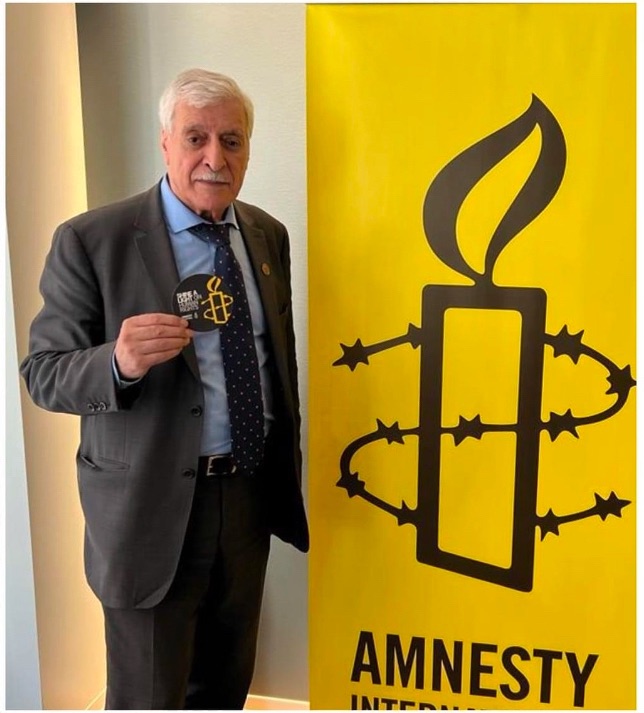
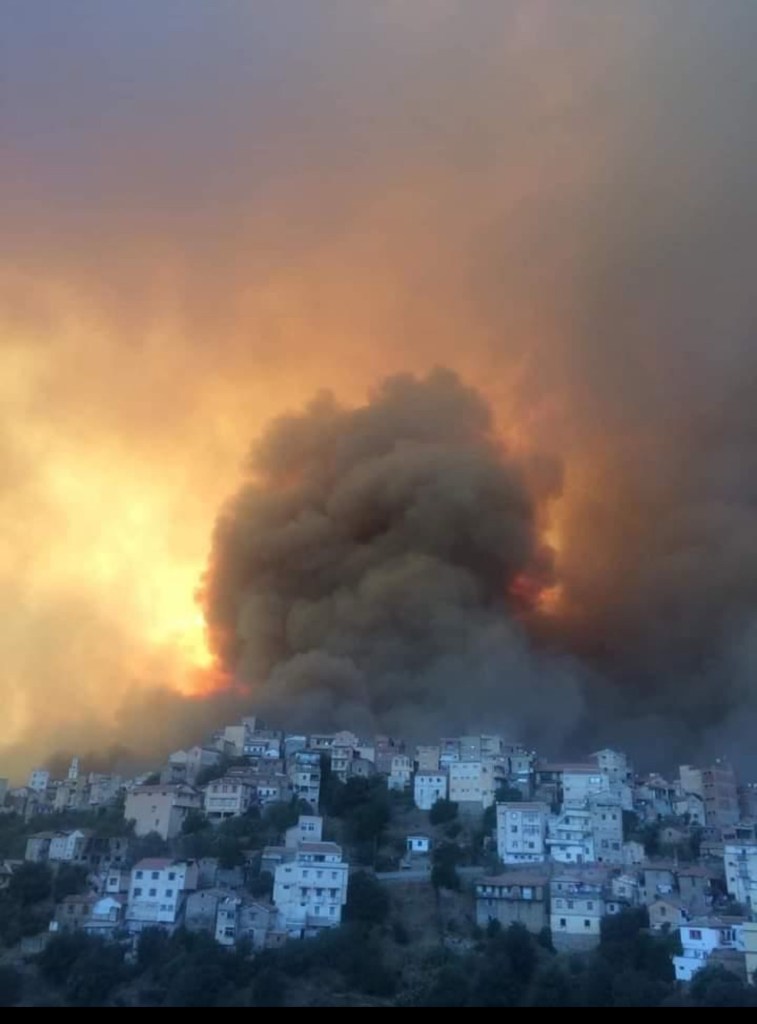
A provisional government was created in exile in France, led by Mr. Ferhat Mehenni as a president. As an immediate resolution, the MAK officially considered Algeria as a colonial state in Kabylia. However, in 2021, the Algerian State described the MAK as a terrorist organization, adopting Article 87 bis of the Criminal Code, considering any opposition or dissent to the current military regime as a terrorist. The reactions of democratic countries and non-governmental organizations were swift, many countries denounced this law and asked its repeal, in particular, Amnesty International and the United States, because its promulgation was based on a political and non-security consideration and seen as a tool of political repression allowing the State to limit and restrict civil and political rights. In 2021, a genocide attempt perpetrated by the Algerian security services, the whole of Kabylia was burned, more than 300 people burned to death, causing also hundreds injured, and left a devastated flora and fauna.
 The Kabylia Post
Leave a comment